Home › Guides › Used cooking oil in Florida restaurants
Used cooking oil in Florida restaurants: storage and pickup
- Pick what you need and give your kitchen's ZIP code.
- Each service goes to the number of local companies you choose, from one to five. We check licenses where the law requires one and email you their names.
- You talk with them and decide. You hire and pay the company directly.
Facts checked 2026-11-02.
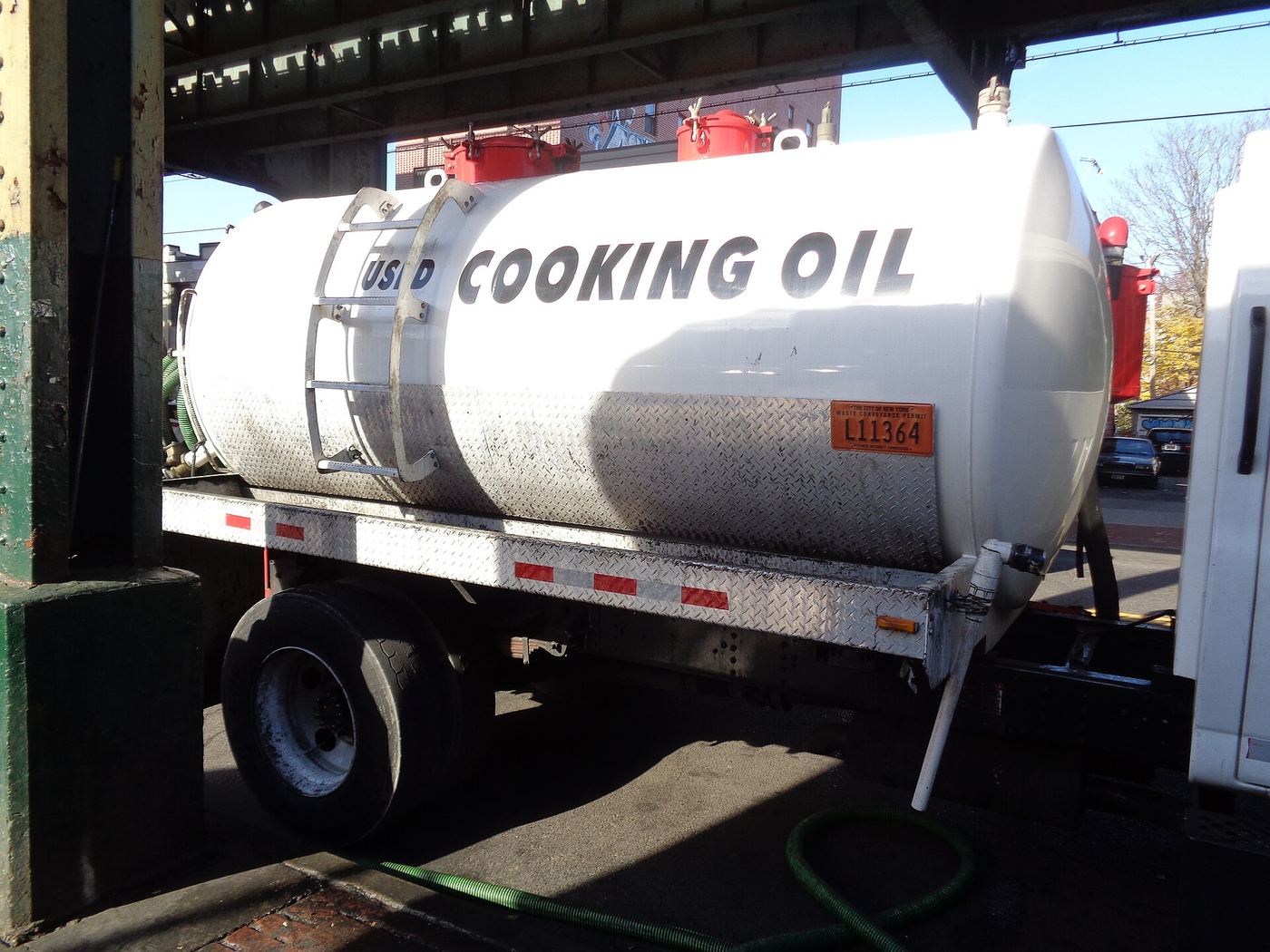

Used cooking oil is the fryer oil you drain from the kitchen. In Florida it is handled apart from grease trap waste. A collector picks it up from a storage bin, and some collectors pay for oil while others haul it away free. We did not find a state license aimed at cooking oil collectors.
How it differs from grease trap waste
Grease trap waste is the fat, oil and food solids that collect in an interceptor under the sink. Florida's grease waste law, section 403.0741, controls who may pump and haul that waste. The same law leaves "receptacles designed specifically for collecting used cooking oil or fats and bones" out of its definition of an interceptor or trap. Under that law a fryer oil bin is not a grease trap, so the licensed hauler rules and manifests in grease traps do not apply to it.
Storage
We found no statewide Florida rule for how a restaurant stores used cooking oil. Ask your fire marshal, your landlord and your local utility what they want for placement, containment and spill cleanup. Your DBPR plan also shows where the dumpster and storage areas sit. See opening a restaurant.
A local company can take it from here. One form, free for restaurants.
Get connectedCollection
A collector picks the oil up from your container. Agree in writing on the pickup schedule, who owns the container and who cleans up spills.
We found no state license for cooking oil collectors. FDEP does register transporters and processors of "used oil" each year under Rule 62-710. That program covers used oil as chapter 403 defines it. We could not confirm whether it includes cooking oil, so ask the collector what registrations it holds.
How collectors are paid
An old FDEP guidance document (2013) describes how rendering plants get restaurant fats and oils. It says these materials are "typically purchased from the generator as a product or are collected for recycling at no charge". A restaurant may be paid for its oil or may get a free pickup. We could not find a source for current per-gallon prices, so we list none. Ask any collector for terms in writing before you sign.
Theft
Used cooking oil has value, and thieves pump it out of restaurant bins. We found no Florida law written just for it. Theft is charged under the general theft laws.
A news report from May 2024 described two men charged with burglary for pumping about 150 gallons from storage at two St. Petersburg restaurants. Police put the value at about $500.
Under Florida law, theft of $750 or more but less than $20,000 is grand theft in the third degree. Theft of $100 to less than $750 is a first-degree misdemeanor.
To lower the risk, use a locked bin if the collector offers one and report thefts to the police.
Ask for a used cooking oil pickup on the form, and the request goes to one local collector.
Questions
Is used cooking oil the same as grease trap waste in Florida?
No. The state grease waste law excludes receptacles built to collect used cooking oil from its definition of a trap. The hauler license and manifest rules apply to trap waste.
Does a used cooking oil collector need a state license in Florida?
We did not find a state license for collectors. FDEP registers used oil transporters under Rule 62-710, but we could not confirm that it covers cooking oil. Ask the collector which registrations it has.
Will a collector pay me for used cooking oil in Florida?
Some collectors pay for the oil and some pick it up for free. FDEP guidance from 2013 says restaurant fats and oils are typically bought from the restaurant or collected for recycling at no charge. We have no current prices.
Can I report used cooking oil theft in Florida?
Yes. Theft is handled under Florida's general theft laws, so call the police and keep the collector's schedule and your bin records.