Home › Guides › Restaurant equipment and food supply in Florida
Restaurant equipment and food supply in Florida
- Pick what you need and give your kitchen's ZIP code.
- Each service goes to the number of local companies you choose, from one to five. We check licenses where the law requires one and email you their names.
- You talk with them and decide. You hire and pay the company directly.
Facts checked 2026-11-02.
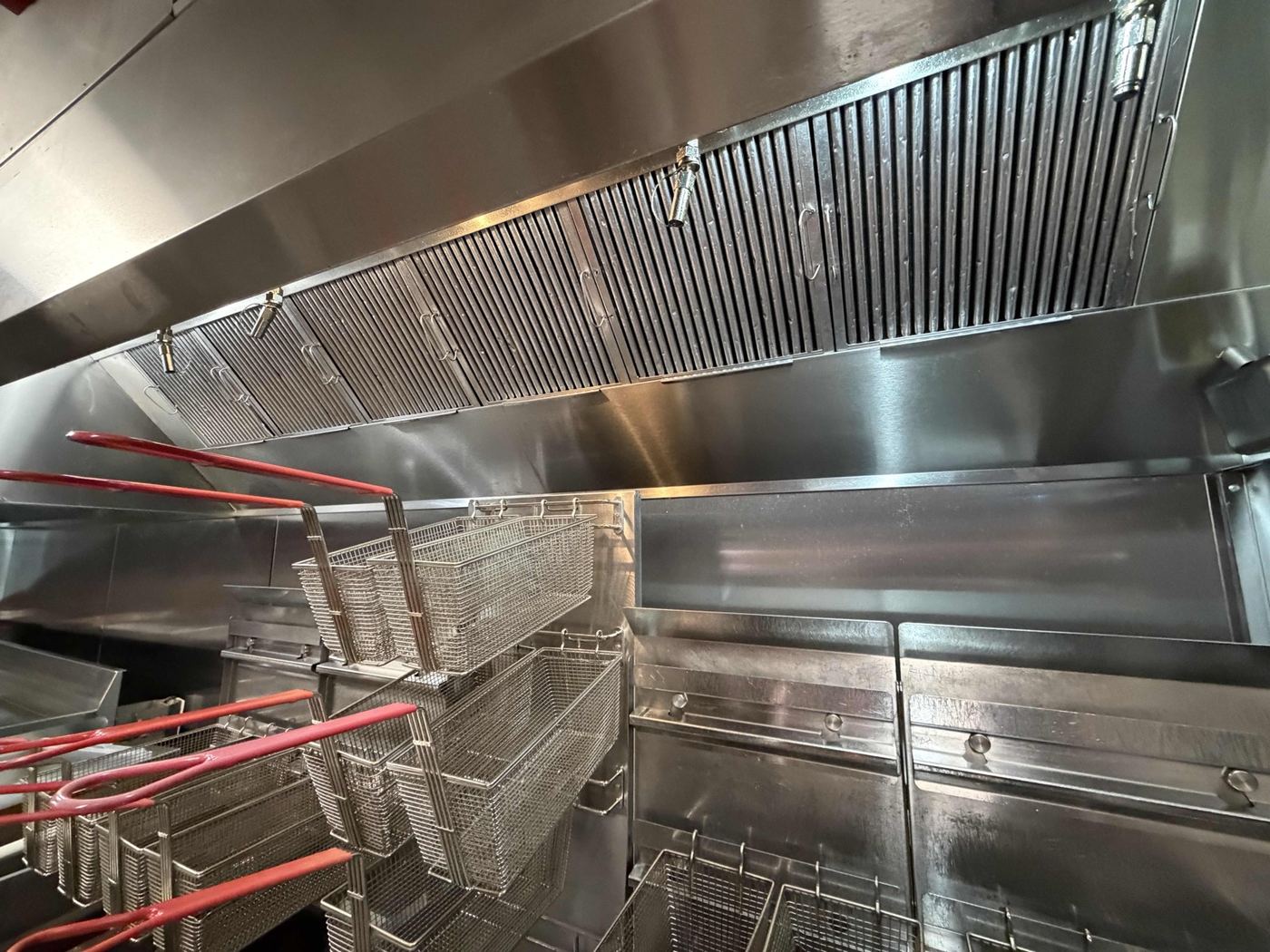
Florida's restaurant rules cover what you cook on and where your food comes from. Equipment should be certified to a recognized sanitation standard such as NSF/ANSI, and food has to come from sources that follow the law. We also checked several Florida utilities for kitchen equipment rebates.
What DBPR expects of your equipment
Florida restaurants follow the 2017 FDA Food Code through DBPR rules. Rule 61C-4.010 applies Chapter 4 of the Food Code, which covers equipment, utensils and linens.
The Food Code says that food equipment certified or classified for sanitation by a program accredited by the American National Standards Institute (ANSI) is deemed to comply with its equipment sections. In practice that means a listing mark from an ANSI-accredited certifier. NSF is one such certifier.
The FDA lists these NSF/ANSI standards for food equipment:
| Standard | Covers |
|---|---|
| NSF/ANSI 2 | Food equipment in general |
| NSF/ANSI 3 | Warewashing (dishwashers) |
| NSF/ANSI 4 | Cooking and hot-holding equipment |
| NSF/ANSI 5 | Water heaters |
| NSF/ANSI 7 | Refrigerators and freezers |
| NSF/ANSI 8 | Powered food preparation equipment |
| NSF/ANSI 12 | Ice making equipment |
| NSF/ANSI 13 | Refuse processors |
| NSF/ANSI 18 | Manual food and beverage dispensing |
| NSF/ANSI 51 | Materials used in food equipment |
DBPR's plan packet asks for equipment specification sheets if an item is "not customary for food service operations". It also lists basics the plan must show:
- A three-compartment sink with drainboards or equivalent shelving if you wash by hand, or a commercial dishwasher with gauges if you wash by machine.
- A detergent or sanitizer indicator on dishwashers installed after January 1, 1998. It must show by sight or sound when more is needed.
- Smooth, easily cleanable, non-absorbent finishes and coved baseboards.
- Refrigeration at 41 degrees Fahrenheit or colder, with thermometers.
- A probe thermometer.
Equipment under a hood also affects the hood and suppression system. Before you buy a fryer or a charbroiler, ask the licensed hood and fire suppression companies whether the existing system covers it. See hoods and exhaust and fire suppression.
Energy rebates for kitchen equipment
ENERGY STAR certifies commercial food service equipment, including refrigerators and freezers, ice makers, dishwashers, ovens, griddles, fryers, steam cookers, hot food holding cabinets, coffee brewers and electric cooktops. The ENERGY STAR Rebate Finder searches utility rebates by zip code.
We checked several Florida utility business pages in November 2026. Florida Power & Light lists HVAC and lighting rebates and a custom incentive. Tampa Electric lists variable frequency drives, water heating, lighting and custom efficiency programs. We did not see a kitchen equipment rebate on either page.
Orlando Utilities Commission lists rebates for air conditioners, insulation, duct repair and battery storage on the page we read. The page has a "Load All" button, so there may be more. We could not read the Duke Energy Florida and JEA business pages, so we cannot say what they offer.
A kitchen equipment rebate from any Florida utility is not confirmed. Ask your utility's business program office before you buy, and use the Rebate Finder.
A local company can take it from here. One form, free for restaurants.
Get connectedApproved sources for your food
The Food Code (section 3-201.11) says food must be obtained from sources that comply with the law. Food prepared in a private home may not be used or offered in a food establishment. Packaged food has to carry the labels the law requires.
Receiving temperatures from the Food Code:
- Refrigerated time and temperature control food arrives at 41 degrees Fahrenheit or below. Raw shell eggs may arrive in air at 45 degrees or less.
- Hot food arrives at 135 degrees or above.
- Frozen food arrives frozen.
- Food shows no sign of temperature abuse.
Molluscan shellfish has to come from sources listed under the National Shellfish Sanitation Program. Keep shellstock tags for 90 days.
Florida's Department of Agriculture and Consumer Services issues food permits to food establishments unless an exemption applies, and renews them yearly. Restaurants licensed by DBPR are covered by DBPR instead. Whether a distributor needs one depends on the business, so ask the distributor to show its permit or its exemption.
What to ask a distributor
- Is the business permitted or exempt in Florida, and can it show the paper?
- Do the trucks hold refrigerated and frozen food at the temperatures above on delivery?
- Do the shellfish arrive with tags, and will it give you copies?
- Is the packaged food labeled as the law requires?
- What are the delivery windows, and who signs for the order?
- What happens when an item arrives too warm?
Tell us on the form whether you need equipment, a food supplier or both, and we'll connect you with the number of local companies you choose (one to five).
Questions
Does my kitchen equipment need to be NSF listed?
The Food Code treats equipment certified by an ANSI-accredited program, such as NSF, as meeting its equipment rules. DBPR's plan reviewers may ask for specification sheets on equipment that is not customary. Ask DBPR if you have doubts about a specific item.
Are there utility rebates for commercial kitchen equipment in Florida?
We did not find a kitchen equipment rebate on the FPL, OUC or Tampa Electric pages we read. Use the ENERGY STAR Rebate Finder with your zip code and ask your utility.
Can my restaurant use food made in a home kitchen?
No. The Food Code says food prepared in a private home may not be used or offered in a food establishment.
What temperature should cold food be at delivery?
Cold food that needs time and temperature control should arrive at 41 degrees Fahrenheit or below, and raw shell eggs may arrive in air at 45 degrees or less.
Sources
- FDA 2017 Food Code
- FDA 2017 Food Code Supplement
- FDA, American National Standards for food equipment
- Rule 61C-4.010, Florida Administrative Code
- DBPR plan review packet (HR-7030)
- Florida Statutes 500.12, food permits
- ENERGY STAR, commercial food service equipment
- ENERGY STAR Rebate Finder
- FPL business programs
- OUC business rebates
- Tampa Electric business