- Pick what you need and give your kitchen's ZIP code.
- Each service goes to the number of local companies you choose, from one to five. We check licenses where the law requires one and email you their names.
- You talk with them and decide. You hire and pay the company directly.
Facts checked 2026-11-02.
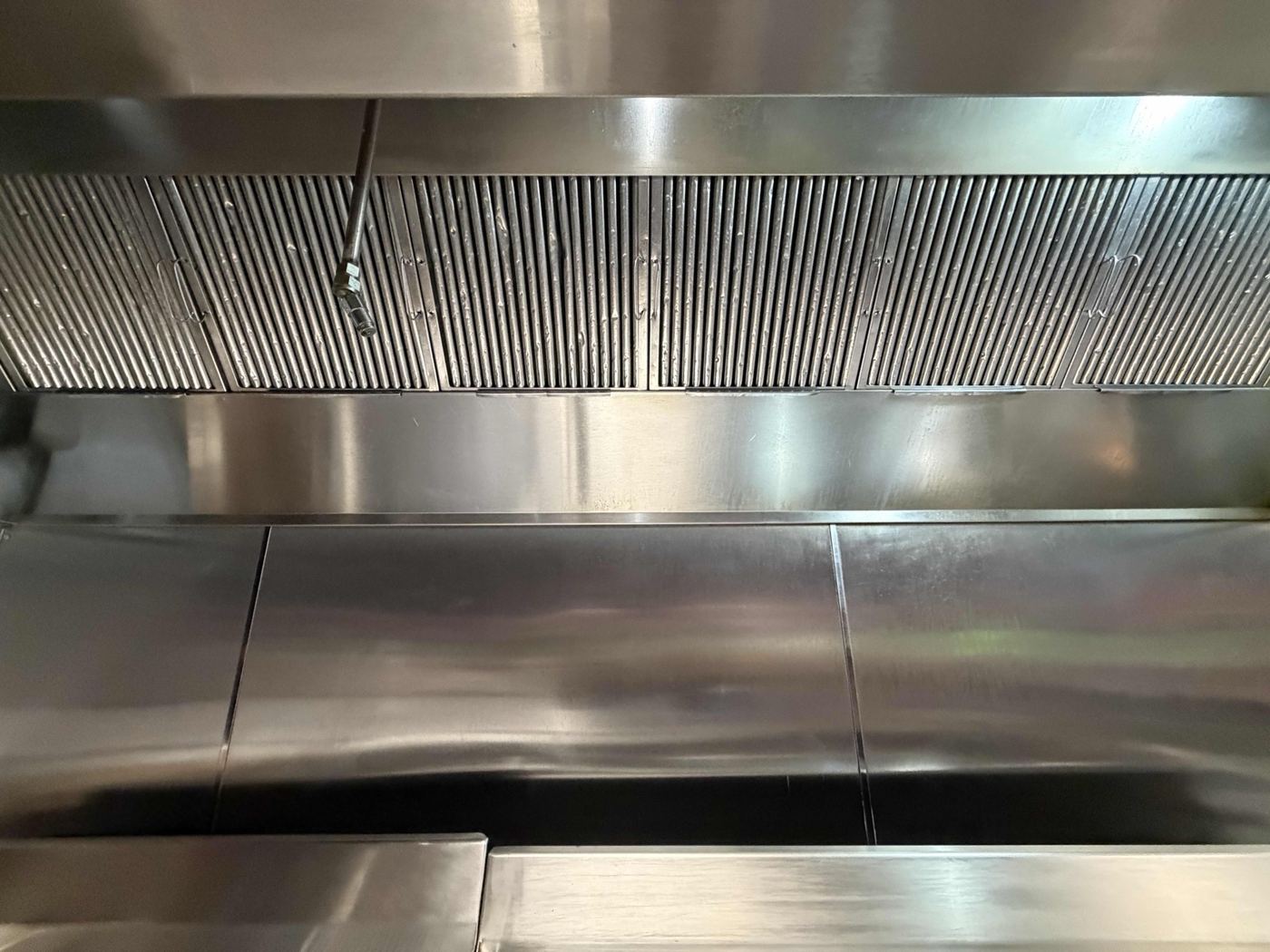
Hood cleaning in Florida follows NFPA 96, the standard the state's fire code adopts. It sets how often the kitchen exhaust system must be inspected, based on how much you cook. When the inspection finds grease deposits, the system has to be cleaned by a trained, qualified and certified person that the fire marshal accepts.
What Florida requires
Florida adopts NFPA 96 (2021 edition) through the Florida Fire Prevention Code, 8th Edition. The state's amendment to the fire code says that if an inspection finds the exhaust system contaminated with grease-laden deposits, the contaminated parts "shall be cleaned by a properly trained qualified, and certified person(s) acceptable to the AHJ". The AHJ is the authority having jurisdiction. For most restaurants that is the local fire marshal.
We did not find a separate state license for hood cleaning. The State Fire Marshal's dealer rules (Chapter 69A-21) cover extinguishers and pre-engineered suppression systems, and they do not cover hood cleaning. The fire marshal decides who is accepted. A fire district may publish its list. One Florida fire district, for example, names several national and trade-school credentials it accepts and says an uncertified vendor is treated as non-compliance. Another district may accept something else, so ask your own office before you hire.
How often
NFPA 96 sets the schedule for inspecting the exhaust system for grease buildup. This table is the schedule as reprinted in the California Mechanical Code, which copies NFPA 96. Florida's adopted edition may differ in some details, so confirm with your fire marshal.
| Type of cooking | Inspect for grease buildup |
|---|---|
| Solid fuel cooking (wood or charcoal) | Monthly |
| High-volume cooking: 24-hour cooking, charbroiling, wok cooking | Quarterly |
| Moderate-volume cooking | Twice a year |
| Low-volume cooking: churches, day camps, seasonal businesses, senior centers | Yearly |
If an inspection shows grease buildup, the system has to be cleaned. Your fire marshal decides which row fits your kitchen.
A local company can take it from here. One form, free for restaurants.
Get connectedWhat a proper cleaning covers
NFPA 96 treats the exhaust system as a whole: the hood, filters, ducts, fan and the grease collection parts. A proper cleaning:
- Covers the hood, the plenum, the duct to the roof and the fan, including the parts that are hard to reach.
- Takes the filters out and cleans or replaces them.
- Leaves the fire suppression system usable. The cleaner keeps chemicals off the fusible links and detectors.
- Uses no flammable solvents.
- Leaves the surfaces free of powder or coating afterward.
- Puts panels and dampers back as they were.
- Turns off or locks out the switches that run the equipment before work starts.
These cleaning details come from a state health department guide to the 2011 NFPA 96 edition. Florida uses the 2021 edition, so the exact wording may be different. Use them as a checklist when you judge a cleaner.
Florida's building code calls for cleanouts and access doors in the grease duct and for hinged roof fans, so the cleaner can reach the system. Keep the access panels clear. See hoods and exhaust.
The service label, certificate and report
After the work you should get:
- A service label on or near the access panels with the cleaning company's name and the date.
- A certificate naming the company, the person who did the work and the date.
- A written report that lists any areas that were not cleaned or could not be reached.
Keep these where you can find them for the fire marshal. If the report says a section could not be reached, that section still has grease in it. Fix the access and have it cleaned.
What to ask before you hire a hood cleaner
- Ask your fire marshal's office which cleaners and credentials it accepts.
- Ask the company for its certificate numbers and a sample report.
- Find out whether it does the roof fan and the full duct, and what it will leave undone.
- If the company also does suppression work, Florida requires a State Fire Marshal license for that. See fire suppression.
Cleaning crews that work on duct systems may also need a contractor license under chapter 489 if the work includes taking the system apart. We could not confirm whether that covers kitchen exhaust, so ask your building department or fire marshal.
A hood cleaning request on the form goes to the number of local companies you choose (one to five), so add your ZIP code and the date you need it done.
Questions
How often must a restaurant in Florida clean its hood and ducts?
NFPA 96 sets inspection every month for solid fuel, every three months for high-volume cooking, every six months for moderate-volume cooking and yearly for low-volume cooking. Grease found at an inspection has to be cleaned. Ask your fire marshal which schedule fits your kitchen.
Does Florida have a state license for hood cleaning?
We did not find a state license for hood cleaning. The fire marshal decides which cleaners it accepts, so ask before you hire.
What paperwork should I get after a hood cleaning?
After a hood cleaning you should get a service label near the access panels and a certificate with the company, the person and the date. The report should list any areas not cleaned.
Who enforces hood cleaning rules?
The local fire marshal, as the authority having jurisdiction, enforces the Florida Fire Prevention Code, including its hood cleaning rules.
Sources
- NFPA 1 Florida amendments, 8th Edition Florida Fire Prevention Code (State Fire Marshal PDF)
- Rule 69A-3.012, adopted NFPA editions
- NFPA 96 inspection schedule as reprinted in California Mechanical Code 514.3
- West Manatee Fire Rescue, hood system maintenance letter
- Chapter 69A-21, Florida Administrative Code (State Fire Marshal PDF)
- Minnesota Department of Health, protection of kitchen cooking equipment
- Florida Building Code, Mechanical, chapter 5 (UpCodes copy)